
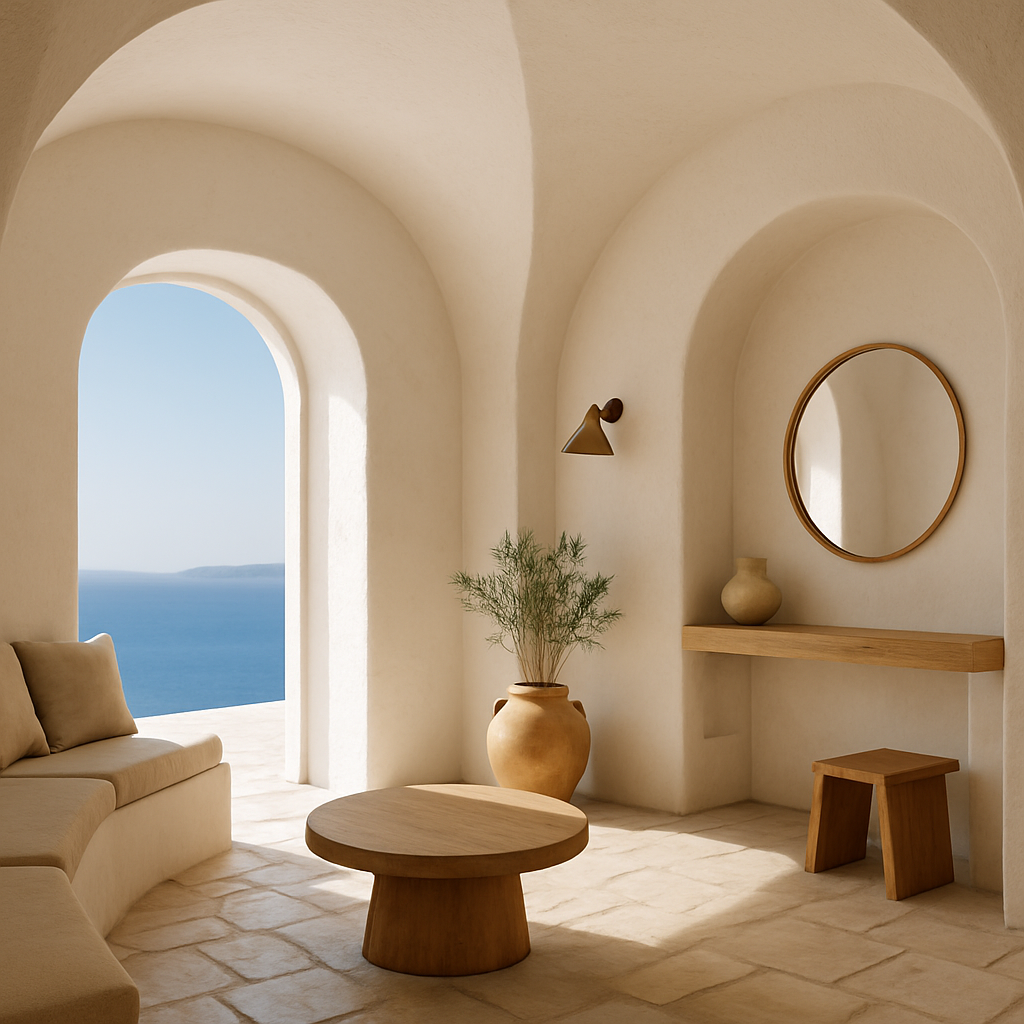
A Historical Glimpse
Traditional Greek architecture dates back to ancient times, with influences from Classical architecture visible even in contemporary designs. The Cycladic islands, such as Santorini, Mykonos, and Paros, offer perfect examples of this unique style. The use of flat roofs, cubic shapes, and narrow alleys were not only aesthetic choices but practical responses to the harsh Mediterranean climate—maximizing shade and airflow, while reflecting sunlight to keep interiors cool.
Over time, the vernacular evolved to include more refined elements such as arched doorways, built-in furniture, and locally sourced stonework. What remained consistent was the focus on minimalism, functionality, and respect for the landscape.
—
Key Elements of Greek Mediterranean Architecture
1. Whitewashed Walls
The most iconic feature of Greek architecture is undoubtedly the pristine white exterior. White reflects sunlight, keeping interiors naturally cool and bright. These walls are often made of thick stone or stucco, giving them a tactile, organic feel. The uniform white tone gives buildings a sense of unity and purity, visually harmonizing with the blue of the sea and sky.
2. Blue Accents
Doors, windows, railings, and even rooftops are frequently painted in deep shades of blue. This tradition is both symbolic and functional—blue is believed to ward off evil spirits in Greek folklore, and it also provides a striking visual contrast to the white backdrop. These colors embody the natural palette of the Greek landscape.
3. Arched Openings and Vaulted Ceilings
Architectural arches and domes are frequently used to soften spaces and add elegance. Arched doorways and windows frame beautiful views while inviting natural light into the interiors. Vaulted ceilings are not only structurally efficient but add to the sense of spaciousness and airiness.
4. Natural Materials
Stone, terracotta, wood, and linen are central to the material palette. Stone floors and walls add thermal mass and rustic texture. Terracotta tiles and pots are both decorative and durable. Unfinished or lightly treated wood is used for ceiling beams, furniture, and shelving, providing warmth and organic beauty. Linen and cotton textiles in neutral tones bring softness and comfort.
5. Built-in Furniture
In many Greek homes, furniture is integrated into the architecture. Built-in benches, beds, and shelving units made of stone or plaster contribute to a sense of permanence and minimalism. These elements emphasize clean lines and eliminate the need for cluttered furnishings.
—
The Power of Indoor-Outdoor Flow
One of the most important aspects of Mediterranean Greek architecture is its seamless connection between indoor and outdoor spaces. Homes are typically designed around courtyards, patios, or terraces with pergolas covered in vines or fabric to provide shade. Large doors and windows open onto verandas, encouraging breezes to circulate freely.
This lifestyle encourages outdoor dining, relaxing in the shade, and enjoying the landscape—whether it’s a view of the sea, mountains, or a peaceful garden. Nature is not just a backdrop; it becomes part of the architecture itself.
—
Minimalism with Soul
Though minimal in design, Greek interiors are far from sterile. Textures play a critical role: rough plaster walls, handwoven rugs, aged wood, and ceramic pottery all add warmth and character. The simplicity is intentional, stripping away excess to allow natural beauty and craftsmanship to shine.
Decor is curated, not crowded. You’ll often find one or two antique pieces, a handmade vase, or a rustic painting—a nod to heritage and a rejection of mass production. This simplicity brings peace and focus to everyday life.
—
Modern Interpretations
Today, many architects and designers reinterpret Greek Mediterranean architecture in contemporary homes and villas. While maintaining the original philosophy, they incorporate modern amenities, larger glass surfaces, and open-plan living. The result is a style that feels timeless yet modern, traditional yet adaptable.
Designers may blend this aesthetic with other styles like Japandi, bohemian, or industrial to create unique hybrids, but the core values—natural light, material honesty, and serene ambiance—remain intact.
—
Why Choose This Style?
For homeowners and designers looking to create calming, timeless spaces that embrace nature, Greek Mediterranean architecture offers the perfect blueprint. Whether used in a coastal villa or a city apartment, this style instantly evokes a sense of peace, elegance, and authenticity.
It’s especially well-suited for hot climates, as it promotes natural cooling, maximizes light, and connects inhabitants to their surroundings. At the same time, it avoids over-decoration, focusing instead on creating sanctuary-like environments that nourish both body and soul.
—
Conclusion
Mediterranean Greek architecture is not just a visual style—it’s an ethos of simplicity, harmony, and thoughtful living. By integrating natural materials, soft forms, and balanced proportions, it reminds us that beauty lies in restraint, and that connection with the earth and light can elevate everyday life.
Whether you’re an architect, interior designer, or homeowner, embracing this timeless style is a journey toward deeper calm, greater authenticity, and a life more in tune with the natural world.
 French
  English
Awsome