
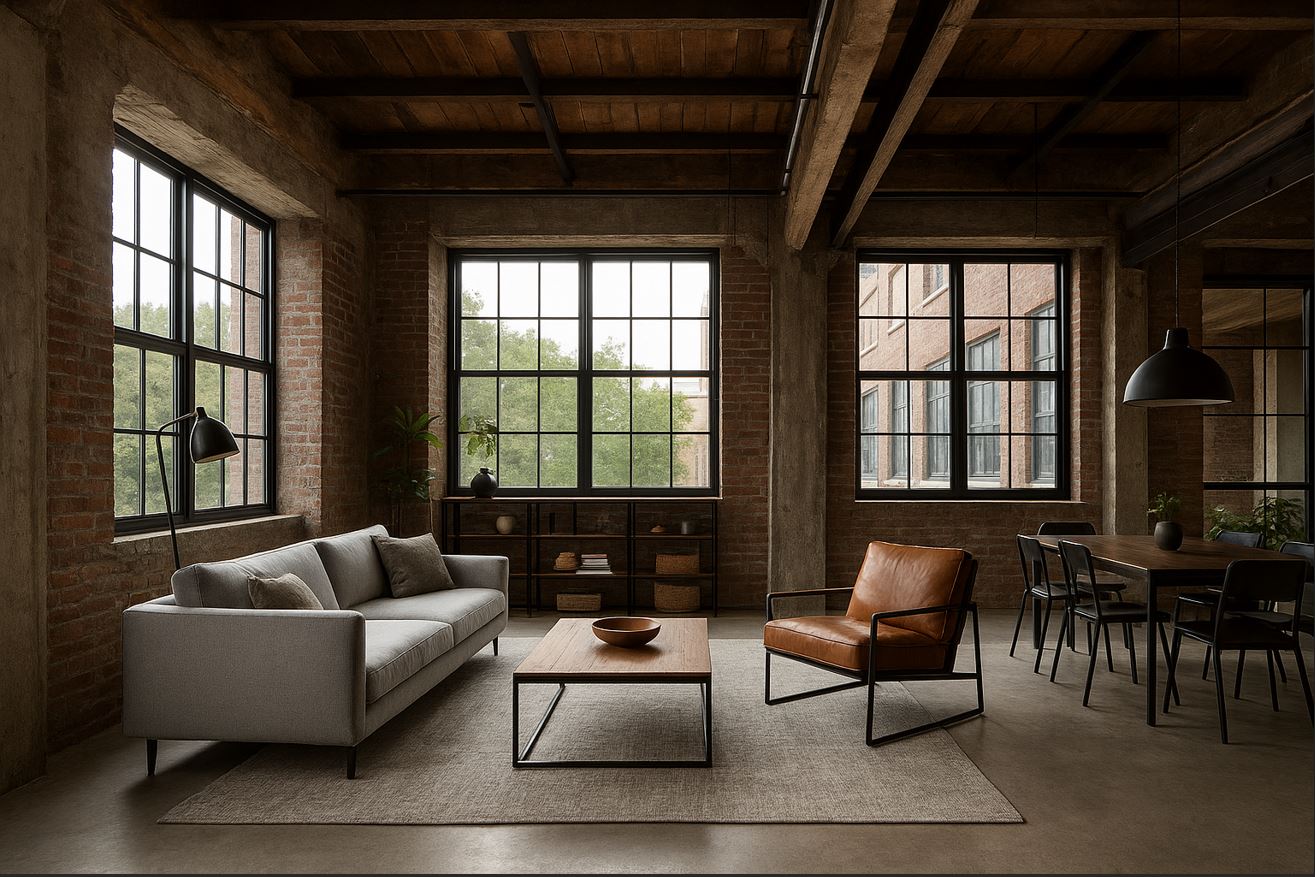
Industrial architecture is far more than simply the design of factories, warehouses and production halls — it has evolved into a rich and expressive style that shapes how we live and work today. Emerging during the age of mechanization and mass-production, it embraces raw materiality, structural honesty and wide-open spaces. By understanding its origins, key characteristics and contemporary relevance, designers and clients can make better use of the aesthetic and functional power of the industrial style.
Origins and Historical Evolution
The roots of industrial architecture lie in the radical transformations of the Industrial Revolution (circa late 18th century onward). With the rise of steam power, iron and then steel production, new building types emerged: factories, large workshops, warehouses and mills. These buildings required structural innovations — larger spans, fewer internal load-bearing walls, and the freedom to shape light, volume and air.
As steel and reinforced concrete became viable, architects and engineers were able to push beyond the constraints of masonry construction. The result: open-plan interiors, curtain walls of glazing, exposed structural systems and a new aesthetic of functionality. Notable examples like the AEG Turbine Factory (Berlin, 1909) exemplified how industrial buildings embraced design logic rather than simply mimicking traditional forms.
Over time, many of these industrial buildings have been repurposed: warehouses turned into lofts, factories into creative workspaces, old mills into cultural venues. This adaptive reuse has helped strengthen the appeal of industrial architecture not just functionally but aesthetically.
Key Defining Characteristics
When one speaks of “industrial architecture” as a style, the following features often appear:
Exposed structural systems and materials: Steel beams, columns, trusses, visible joints, as well as systems like ducts, pipes and conduits are often deliberately displayed rather than hidden. This conveys honesty of construction and an aesthetic of utility.
Raw finishes and material authenticity: Brick left un-plastered, concrete surfaces left as “cast”, steel left unpainted or simply treated. The idea is to let materials speak for themselves: surfaces that show wear, patina, texture.
Large-scale openings and glazing: Industrial buildings often needed plenty of daylight and ventilation, so expansive windows, skylights and high ceilings became typical. In modern reuse, these features help open spaces to light and view.
Minimal ornamentation; emphasis on function: Decoration is reduced or eliminated, letting form, material and structure serve as the aesthetic. The “machine for production” becomes part of the visual narrative.
Flexible, open interiors and large spans: With fewer internal walls and strong structural systems, spaces can adapt more easily — a key benefit both historically (for manufacturing) and today (for offices, studios, lofts).
Adaptive reuse and sustainability: Because many industrial buildings are large, robust and surplus to original function, they lend themselves to conversion. Repurposing them saves embodied energy, preserves industrial heritage and offers unique character.
Applications & Contemporary Relevance
While industrial architecture was originally driven by production needs, today its aesthetic and spatial qualities are applied across many types of buildings:
Residential conversions: Former factories and warehouses are transformed into loft apartments. You’ll often see exposed brick, steel framing, concrete floors, open-plan living. The industrial character gives a sense of history and spaciousness.
Commercial & creative workspaces: Offices, coworking hubs, gallery spaces adopt the industrial aesthetic for its openness, flexibility and “authenticity”. The rough textures and large volumes create an environment that’s both spacious and full of character.
New-build projects with industrial cues: Even in brand-new construction, architects borrow industrial vocabulary — raw materials, structural legibility, open spans — to evoke a sense of industrial chic or “honest architecture”.
Cultural / public uses: Old factories become museums, community hubs or event spaces. Their scale and structure lend themselves to large installations, flexible programming and dramatic presence.
Design Considerations & Best Practices
If you’re working on a project (new or conversion) in the industrial style, here are some practical considerations:
Balance rawness with comfort: The industrial look can feel cold or utilitarian if overdone. To avoid that, integrate warmer materials (wood, textiles), soft lighting, and human-scale elements.
Legibility of structure: If showing structural or mechanical systems, make sure their form and logic are clear — avoid random decoration that simply mimics structure. The beauty comes from the real (or convincingly real) functional elements.
Lighting and volume: High ceilings and large spans require thoughtful lighting design. Daylight is an asset — use the big windows or skylights to your advantage. But also consider acoustic treatments, as big volumes can amplify sound.
Material selection and detailing: The raw surfaces should still be durable and well-crafted. Roughness is fine, but not neglect. Concrete might need sealing, steel painting might require corrosion protection, and brick may need pointing.
Sustainability & reuse: If repurposing an old industrial building, understand its structural constraints, heritage value, and environmental opportunities (large daylight, robust structure, potential for passive strategies). Also plan for modern performance: insulation, HVAC, accessibility.
Human-scale and function: Even in large spaces, design for human needs: clear wayfinding, cozy zones inside the expansive shell, and appropriate proportions so the space doesn’t feel overwhelming.
Why It Resonates Today
There are several reasons why the industrial style remains popular and relevant:
Authenticity and honesty: Exposed materials and structure feel honest, unpretentious and real — a contrast with overly polished or synthetic finishes.
Flexibility: The basic structural logic supports a variety of uses and changes over time — something that aligns with modern needs for adaptive spaces.
Historical character: Many industrial buildings carry a legacy of production, labor, and industrial heritage — converting them gives spaces story and depth.
Urban regeneration: Industrial zones within or near cities are increasingly attractive for conversion into vibrant mixed-use communities. They offer spatial scale, accessibility and raw character.
Aesthetic appeal: The industrial look has an urban, edgy, loft-style appeal. It resonates with lifestyles and professions that value openness, creativity, and a “built heritage” feel.
Challenges and Pitfalls
Of course, the industrial style isn’t without its challenges:
Environmental performance: Large old buildings may have poor insulation, high heat gain or loss, and require upgrades to systems for comfort and efficiency.
Acoustics: Exposed concrete and steel can create echo or harsh sound environments unless properly treated.
Scale and proportion: Big volumes can feel cavernous; some human-scale subdivision or softening may be needed.
Authenticity vs. pastiche: There’s a risk that the industrial aesthetic becomes merely decorative (pipes painted silver, steel beams added as “look”), rather than genuinely structural or functional. The best industrial architecture has authenticity.
Heritage and regulatory constraints: For older industrial buildings, heritage protections may limit changes; structural upgrades may be costly.
Conclusion
The industrial architecture style blends function, material truth, structural clarity and spatial generosity. Whether you’re converting a former factory into loft apartments, designing a modern flexible office, or simply borrowing industrial aesthetic cues in a new build, the core principles remain: show the structure, celebrate the material, open the space, and ensure comfort for the user.
In doing so, you gain not just a visual style but an environment that carries history, supports adaptability, and creates a strong architectural identity. For designers, clients and communities alike, industrial architecture offers both practical advantages and enduring appeal.
 French
  English